Person welding together two large I beams.

Common Methods In Custom Fabrication

Although we have a variety of general construction services that probably appear a lot more important, we wouldn’t be anywhere without our in house custom fabrication capabilities and our custom fabrication team. This is because so much of what we do here at A1 Precision Solutions relies on creating something custom or making a modification, at least in some small part.

Take mezzanines and raised storage areas, for example. No two mezzanines are the same. Of course there are standard parts to build a mezzanine, but sizes and heights will differ. This means stairs or safety railings may need to be custom fabricated. And that’s just one example.

Our custom metal fabrication services are fairly varied, and we’re proud to say that we’re confident we can create anything clients can think of. We’re serious with that confidence. There’s a solution for everything, and if a client needs something unusual, we can make it.

There are a number of techniques and methods involved in custom fabrication, and this article is hardly a “how to” for fabrication. However, it should give you a good idea about what goes into fabricating things out of metal, and hopefully a few ideas for your next project.

Cutting

Whether something is getting fabricated out of steel, wood, plastic, or something else, there’s usually a bit of cutting involved. Most materials don’t get to us cut to the right size, so ultimately our fabrication team needs to cut it to size.

When working with steel and other metals, there are a number of methods that can be used for cutting. Commonly our team will use cold saws, band saws, and guillotining for processing parts.

Getting more complicated, plasma torches, lasers, and even water jets are used to cut metal. These methods aren’t as common in our custom fabrication projects though, and are often only used for more specialised projects.

Welding

We can cut metal and we can also put it back together again. That’s where welding comes in.

Whether it’s welding metal sheets, pipes, I-beams, or other fabricated pieces together, a lot of our fabrication projects rely on welding.

Our welders don’t just work on custom fabrication projects though. Having a good team of welders available is valuable for a variety of projects in the general construction space. Other than cutting, welding is an important component of fabricating something from nothing.

Bending and Forming

Bending and forming metal is exactly what it sounds like. We have a 60 tonne “V” block, a 200 tonne tool press, and more tools to bend, hammer, and generally manipulate metal into any shape that’s desired.

Some bending jobs are as simple as using a tube bender to make pipes for custom projects, or they can be as complicated as creating unusual shapes that then need to be welded together into something unique.

No two custom fabrication jobs are the same.

Machining

Machining seeks a similar outcome to bending and forming but it’s done differently.

While bending and forming does not result in any material being removed, machining does. Machining may rely on drills, lathes, or mills to create the desired metal shape or form. This could be as minor as drilling or punching holes in the metal to using a lathe to create a specific shape.

Of course a machined piece of metal can be then cut, welded, or bent as well.

There’s More To Custom Fabrication Than This

Of course our in house fabrication team does a lot more than what’s listed here, but hopefully this article has given you an idea of the basics that go into most of our projects, regardless of their size.

As we already mentioned, custom fabrication comes into account for many different types of projects, even if just in a minor way. Because of this our custom fabrication capabilities range from very small one off projects all the way up to volume productions.

If you have a challenge that needs a solution, perhaps having something bespoke made is the answer. We’re happy to help.

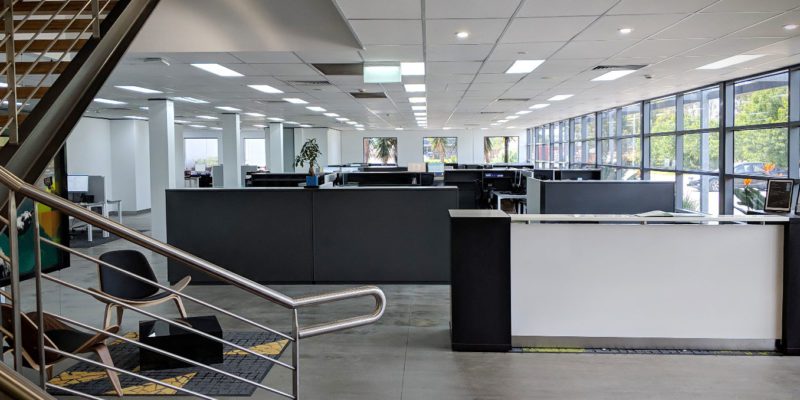
Glazed Office Partitions

What’s The Difference Between An Office Refurbishment And An Office Fit-Out?

If you’re looking at your current office space and thinking it needs to change, you’re probably trying to determine whether it needs a full office fit-out or just an office refurbishment. But what’s the difference between the two? And does it matter whether you’re getting a fit-out or a refurbishment?

While it’s probably more important that your builder knows what you’re talking about even if you don’t use the exact right terminology, being educated when you go into any project helps to make sure nothing is missed when you ultimately go to fit-out or refurbish your office.

Let’s start by defining what each term is.

What Is An Office Fit-Out?

An office fit-out usually starts with a blank slate. The shell of the office will be there, whether that shell is a smaller area of a building, a single floor, or the entire building. But that’s likely all there will be. The previous tenant of the office probably completed their end of lease make good to bring the space back to its original condition and it’s probably just an empty room.

From here, an office fit-out would involve building all the internal structures like walls and partitions, installing a suspended ceiling, and all the utilities. It could also include installing amenities like toilets and staff kitchens if they don’t exist already.

After this part of a fit-out, the space would now look more like an office, but it wouldn’t have any furniture in it yet. So, the next part of the fit-out is adding furniture like desks, chairs, and decorations as necessary.

Office fit-outs can be seen as having three main steps (not including the initial planning of the fit-out):

  • Walls, ceilings, and utilities are put into an empty building.
  • General elements like paint and flooring are installed, as well as amenities like toilets and kitchens.
  • Furniture and decorations are installed to finish the fit-out.

Office fit-outs usually happen when a business is relocating to a new office, but could also happen if your office space is simply expanding. Basically, an office fit-out is creating an office from nothing.

What Is An Office Refurbishment?

An office refurbishment is usually completed on an already existing office space and can include a lot of different elements. A smaller office refurbishment may just involve some new paint and carpet to make it feel new again. Alternatively, a business may look to just replace all the office furniture to make the office feel a little bit more modern. A larger office refurbishment may look at stripping back most of the office’s elements and redoing almost everything. At this point the office refurbishment is starting to look much like an office fit-out, but there’s no clear line here.

Office refurbishments can be varied, but they’re generally faster and less expensive than a full fit-out. This is because many of the elements that make a space an office are already there and, even if it’s a major refurbishment, not everything will be replaced. What’s better about a refurbishment is that often it can be done with minimal disruption to a business. Office refurbishment companies like A1 Precision Solutions can even work out of hours if needed. This ensures that your business can keep operating while also getting a great refurbishment job done.

Generally speaking, if you’re looking to upgrade or modernise your existing office, a refurbishment will probably do the job rather than going for a full office fit-out. It can also be worthwhile speaking to a professional for advice. A reliable building company like A1 Precision Solutions can give you advice on how to scope a project to keep business downtime to a minimum while also keeping the project within a reasonable budget. We can either suggest elements of your project that can be removed altogether in order to save on costs, or even sometimes add things you wouldn’t think possible within your budget.

Refurbishments And Fit-Outs Aren’t Just For Offices

Fit-outs and refurbishments need to be done for all sorts of businesses including restaurants, shops, and showrooms. Even industrial spaces need a warehouse fit-out. All of this is similar to office fit-outs and refurbishments in the steps taken and the scope of the work.

If you need a new office, whether that’s a full fit-out or an improvement through an office refurbishment, we’re happy to talk to you about your requirements and give advice on how to proceed. Just contact us for more information and a quote.

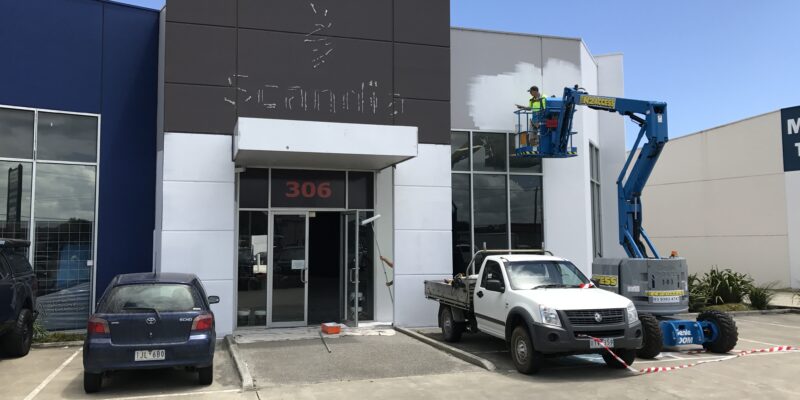
The exterior of a retail building having a defit done; the building has been stripped of branding and is being painted white.

What Are Make Good Obligations?

If you’re a commercial tenant, whether that’s in an office, a retail space, hospitality, or something else, you may have heard of “make good obligations.” A make good clause in a commercial tenancy agreement is common and describes how the premises is expected to be left at the end of the commercial lease.

Exactly what specific make good obligations are will vary depending on a lease, but generally speaking they can be as simple as leaving the property clean and tidy all the way up to stripping the it back to the base building; as it was before any sort of building fit-out was installed. The make good clause is in the lease to protect the landlord from any damage done to the building as well as in order to make sure they’re not out of pocket by having to remove and modifications the tenant made.

What’s in the make good of your commercial tenancy will likely depend on what condition the site was in when you started your tenancy:

  • If your location was at base building when you started your tenancy, and you completed your fit-out yourself, it’s likely that your make good obligations are to go back to base building.
  • If your location had a fit-out already, for example with carpeting, a suspended ceiling, etc., and all your business needed to do was bring in furniture, it’s likely you’re only expected to remove your property and leave the premises clean.

Ultimately though, exactly what your make good obligations are will be in your tenancy agreement, and it’s probably something that was negotiated at the beginning of your lease. If you’re not sure, it’s something to keep in mind when negotiating the lease of your new premises.

For example, if your business’ office is relocating, you’ll have make good obligation at your old office. Your new office may be at base building and need a full office fit-out. When negotiating your new lease, make sure to find out what’s expected when you finish that lease; whether the landlord wants to keep the new fit-out or whether you’re expected to remove it.

Also keep in mind that an end of lease make good is more than just removing anything that the tenant added to the building. A lot of things that happen in a make good are also just in line with a business moving locations. There may be some repairs that need to happen, for example. While it may not be part of your make good clause, if you’re moving offices, there may be secure data that needs to be destroyed or recycling of old computers that needs to happen. Then it also needs to be considered what will move to the new location and what will be disposed of.

Can I just pay out my commercial landlord to return the building to its original condition?

The make good clause of some commercial leases allows the tenant to simply pay a lump sum at the end of the lease rather than having to return the site back to its original condition. While this may be convenient and speed up the process of your business relocation, it might not be the best choice because you can usually get the make good done for less money by organising it yourself.

Although this may sound difficult, especially while you’re trying to relocate your business at the same time, organising a make good isn’t that hard at all.

As mentioned, much of the time, make good obligations involve getting a premises back to base building, whether that premises is an office, a restaurant, a shop, or something else. While de-fitting a building takes skill and knowledge, it’s something a professional building company like A1 Precision Solutions can easily do with little input from the client.

This will allow you and your business to concentrate on designing the fit-out of your new building.

Ultimately, we’re here to help. As commercial builders, we can perform make good services as well as help you relocate your business to a new building and also provide fit-out services. This means you can move your business while you only have to work with one supplier, not three. This ensures that your business move will go smoothly, keep the project on time, and keep the budget in line with what’s been quoted.

Pallet Racking

10 Tips To Optimise Your Warehouse

If you run or work in a warehouse, it’s important that it’s run as optimally as possible. Whether that means maximising storage, reducing picking and packing time, or keeping costs, down, warehouse design and optimisation is important for any business that relies on logistics.

Warehouse owners often default to “let’s find a bigger space” to solve many of these problems, but a warehouse relocation can be costly and also be disruptive to your business. Because of this, figuring out how to use your existing space as effectively as possible should be your first consideration before simply relocating.

With that being said, another common idea when it comes to optimising warehouses is to automate where possible and/or use robots. While automisation and robotics are a great way to get the most out of a warehouse, these options aren’t always possible due to price, industry, or application. If you can get an automated solution to your warehousing, it’s definitely worth considering, but if you can’t (or you’re looking for other ideas as well), read on for 10 tips to optimise your warehouse.

1. Consider what you’re trying to improve

When we first start working with clients, many of them say they want their warehouse to operate better, but what does that mean? Do they want more efficient storage? Do they want more efficient picking and packing time? Or do they want to reduce costs? Most warehouse operators probably want to achieve all three when optimising their warehouse, but they’re also three separate problems. Sure, these things are connected, but you also have to figure out what the problem is in order to find a solution. Or maybe you want to improve another aspect of your warehouse. Keep that in mind before you start with random fixes.

2. Keep safety as the number one priority

This tip probably should have been number one, but when mapping out any plan, you need to find the problem first. But yes, safety always needs to be the highest priority in any industrial setting, including warehousing. You don’t want to get hurt at work and you don’t want your warehousing team to get hurt at work either, this is just the right attitude to have. But how can safety also help improve the efficiency of a warehouse?

A warehouse free of tripping hazards, with good lighting, safety barriers, and clear walkways to keep pedestrians out of the way of machinery means workers can perform their duties more quickly and with more confidence. What’s more even a relatively minor trip or slip slows down the whole warehouse operation, so even small breaches in safety need to be avoided to keep a warehouse operating at its peak.

3. Install a raised storage area

Mezzanine Floor Construction
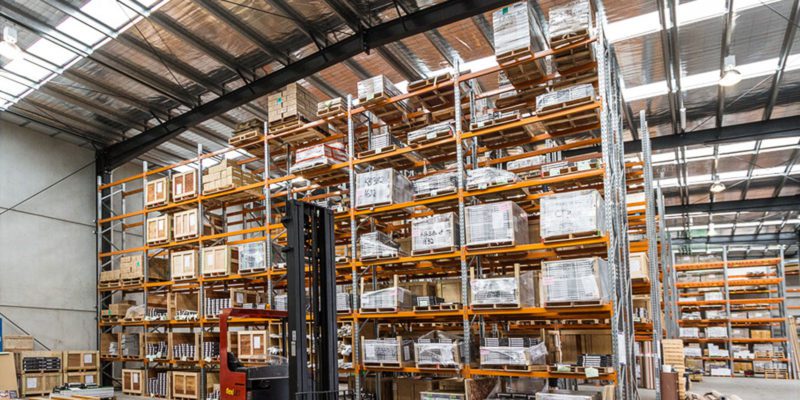
Mezzanine Raised Storage Area

If you’re concerned about warehouse storage, consider installing a mezzanine raised storage area. Although full height pallet racking can be a good option to use all the vertical space in a warehouse, this isn’t appropriate for all businesses. Because of this, a raised storage area may be the best way to use all the vertical space in your warehouse.

A mezzanine raised storage area can cover only part of your warehouse all the way up to covering your entire warehouse, effectively doubling your floor space.

4. Install conveyor belts

A lot of time is wasted in warehouses through workers having to travel from one area of the warehouse to another, conveyor belts can solve this problem.

If you already have a raised storage area or area considering installing one, you may be concerned about the time it will take workers to travel up and down stairs. Having an upstairs team passing goods down to a downstairs team via gravity conveyor belts solves this problem.

In fact, relatively simple conveyor systems can be designed to quickly and easily send goods from one end of a warehouse to another, preventing employees having to manually move goods large distances.

5. Ensure you have the right pallet racking and shelving for your warehouse

Difference types of warehouse pallet racking and shelving have their own pros and cons and different applications based on what’s being stored. There’s no “one size fits all” when it comes to pallet racking and shelving.

Drive in pallet racking, for example, can be great for high density storage but not useful if you have stock that needs to be managed on a first in first out basis. Meanwhile, a pallet live storage system allows for easy to manage first in first out stock, but doesn’t have the density of drive in pallet racking.

Ultimately, there’s a solution out there for every circumstance, but a solution that worked for one warehouse may not work for another. Of course replacing all of your pallet racking or shelving may be expensive, but businesses like us at A1 Precision Solutions have pallet racking buy back options that will reduce the overall cost of buying new racking. Then your warehouse is more efficient, reducing overall costs.

6. Ensure high velocity items are near packing areas

This may seem obvious to some, but put the items that are shipped the most frequently close to your packing area. You may even want to consider reorganising your warehouse on a seasonal basis if that will reduce travel time for warehouse workers and overall raise efficiency.

This is all about reducing picking and packing time and costs by needing fewer workers since they’re working more quickly.

7. Upgrade and maintain your materials handling equipment

Technology changes in materials handling equipment happen all the time, when was the last time you considered upgrading yours? Or maybe your forklift isn’t running as well as it should be, posing both a safety risk while also slowing down materials transport within the warehouse, it may need to be replaced. While no warehouse manager wants to have to spend money on new materials handling equipment, it could end up paying for itself through a more efficient warehouse.

8. Outsource tasks or get temporary workers

If your warehouse efficiency problem is temporary or seasonal, spending money on a permanent solution may not be the way to go. Instead, getting some temporary workers into the warehouse to help or outsourcing tasks to another company may be a better idea. At the very least, finding a temporary solution may give you the time to determine the real problem in the warehouse and find a better solution.

9. Use software

Even small warehouses can benefit from warehouse management software. Warehouse management software (WMS) can show warehouse managers reports of warehouse operations including the flow of goods, stock locations, and other efficiency metrics to not only help in decision making, but also give managers recommendations as well.

10. Hire an expert

Sometimes you need an expert in warehouse optimisation and design to give you the best advice. Running a warehouse efficiently is hard work, so getting ideas from outside parties may be the best way to get more out of your warehouse itself, as well as your warehousing team.

If you need a more optimised warehouse. Contact us today.

Office Renovation and Fit-out

How To Plan An Office Relocation

Whether you’re planning an office relocation because you need a bigger space for your team, your current location isn’t fit for purpose, or just because your business needs a new start, there’s a lot to consider. You’re not just moving your business from one location to another, you’re moving files, computers, people, and potentially a lot of furniture. There’s a bit of logistics that go into all of this.

So, as you’re starting to think about moving your office to a new premises, here are a few things to consider.

Create A Basic Office Relocation Checklist to Start

It always helps to write things down so nothing is forgotten, and you can start with a very basic checklist. From there, sub-items on your checklist can be expanded.

Things to start with include:

Defining the needs in your new office: here you need to outline any “must haves” for your new office space; do you need certain facilities like a server room, warehouse space, or a showroom for example. Also define the size of the space you need and make sure to factor in future expansion needs. Finally, define the location you need your new office to be so you can start looking for space.

Talk to your office fit-out company early: your office fit-out company needs to be involved in your office move as early as possible. The fit-out of your new premises is very often one of the longest parts of an office relocation, so getting started on the planning and execution of it as early as possible will ensure your relocation happens on time, even if there are unforeseen delays.

Organise a moving company: this may sound like an obvious one, but it’s one that’s easily forgotten. Even with a great fit-out in place, there will still be things to move from the old office like computers and files. You may be reusing some of your old office furniture and partitions, so those need to come to.

Plan for people: it’s also easy to forget that the people in the office will also be moving. Beyond just telling them about the move, make sure all employees are able to move their personal affects and have things like access cards to the new office organised before moving day. Speak to heads of department to find out if any employees have leave booked in during the move so that they can get organised early.

Think About How Long Your Office Relocation Will Take

When it comes to timing, you don’t just need to think about how long the move will take, but also the time of year that you’ll be moving. While we all hope things will go to plan, there are a lot of parties involved in an office move, and delays can happen due to your team, the office relocation team you hire, or from the owners of the new building you’re moving into.

While a professional office moving company like us here at A1 Precision Solutions can give you a more precise estimate of how long your office move will take, there are some rough timelines to consider to get you started. Very generally speaking, relocating an office of less than 500 square metres takes about 2 months, while anything above 500 square metres takes 3-4 months. This would include new office fit-out, physically relocating any furniture, files, or other goods from the old office, make good of the old office, equipping employees with new access passes, and more.

Obviously, the timelines above are rough, but it’s a good start for your office relocation planning. However, the earlier you speak to an office relocation specialist, the better.

Finally, in terms of office move timelines, always remember the time of year when planning your office relocation. While it may sound convenient to avoid business downtime, moving your office over Christmas, for example, can significantly delay your project as many other businesses close during this period, leading to delays in sourcing materials or simply booking work. Most other times of the year work well, but consider anything specific to your area of Australia.

Don’t Forget The Small Stuff

If you’re changing offices, there are a lot of moving parts. This makes it easy to forget some smaller jobs that don’t take long to complete, but are ultimately relatively big.

Utilities: your new premises will need utilities like electricity and water. Your new office will also need an internet connection and possibly larger IT infrastructure installation as well. Your office fit-out company may take care of this, but you may need to speak to a company that does utilities and site connections for commercial premises. We here at A1 Precision Solutions can complete both your fit-out and site connections, but not everybody does.

Make good: a make good refers to restoring your old location back to its original state. While you may be able to get your old building owner to organise this, it may be more cost effective to choose your own supplier. We offer end of lease make good services as well.

Insurance: you’ll likely use the same insurance company at your new office, but of course you need to notify the company of your move! This is a very quick job to do, but one that’s easily forgotten. Don’t forget to notify your insurance company until it’s too late.

Amenities contracts: just like your insurance company, notifying your amenities contractors like cleaners, food deliveries, etc. is a quick job to do. Some of these contractors will have minimum notice periods if you need to cancel them, so don’t waste money with overlap if you can avoid it.

Storage: does anything need to be stored temporarily before, during, or after the move? Don’t forget to organise this.

Warehouse fit-out: if your office is one that has a connected warehouse, have you taken into account your warehouse fit-out as well? With all the planning of moving offices, it’s easy to forget the warehouse. So don’t forget your warehouse relocation as well as any pallet racking requirements you may have.

Tell your clients your office is moving: this may seem like an obvious one, but also one that’s easily forgotten. Use the office change to have your account management or sales team reach out to all of your clients to tell them about the office relocation. Not only will you be notifying the clients, it’s also a good opportunity to stay in touch with your client base.

Rely On Your Moving Team

Ultimately, you and your operations team can’t do everything, that’s what professional office relocation companies are for. Some companies will only do a new office fit-out, relocation, or make good of old premises, however, A1 Precision Solutions can handle all aspects of an office relocation. This means you and your team only need to work with a single supplier, making sure you’re out of your old office space and into your new one on time, on brief, and on budget.

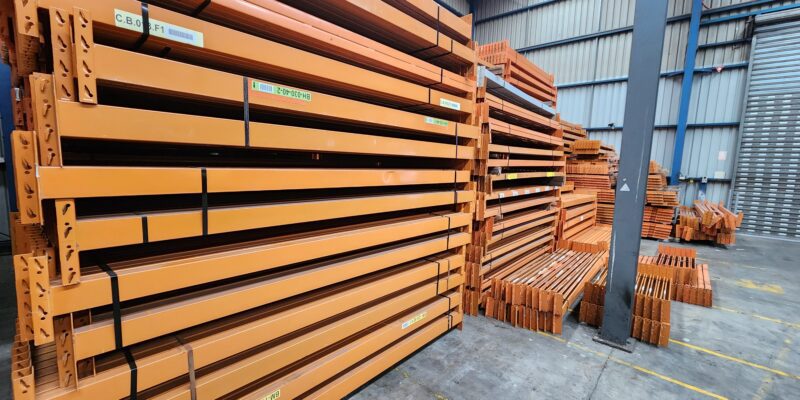
Warehouse storing used Colby pallet racking.

How We Stay Sustainable With Our Pallet Racking

We here at A1 Precision Solutions base all of our actions on sustainability principles in order to preserve our environment and future. Although we are committed to environmental sustainability, it’s not easy to do. Many construction materials, especially steel, aren’t as environmentally friendly as they could be, so we and our suppliers have a number of strategies and procedures in place to minimise the environmental impacts of the products we use. After all, we need to use certain materials like steel in order to supply quality pallet racking to our clients that’s fit for purpose and ensures they have a safe workplace, but it’s important that we balance requirements with sustainable practices in order to keep our environmental footprint to a minimum.

So how does A1 Precision Solutions’ racking business operate in a sustainable way? We have a number of strategies in place that not only help the environment, but are also cost effective for our clients while helping them get the best quality pallet racking products in a timely manner.

Prioritise Locally Sourced, Procured, And Manufactured Materials Wherever Possible

Our racking business has been built in partnership with Dematic’s Colby Storage Equipment Division. This has us supplying and installing both new and used Colby racking products. We like working with Colby products because they’re made from locally created Australian steel from Bluescope Steel in Woolongong, with coils delivered to Colby’s state of the art manufacturing facility in Belrose, New South Wales. Not only does this ensure an extremely high quality of steel, but locally sourced materials also don’t need to travel as far, which creates a lower environmental impact from the product.

Since the racking itself is also manufactured in Australia, it doesn’t have to travel very far to get to end customers, further reducing the carbon footprint of racking manufacturing and transport.

And not only is all of this good for the environment, it’s good for our clients as well. By keeping transport distances down, we’re able to get racking to our clients more quickly and at more competitive costs. It literally pays to be environmentally friendly.

Ship Products With Minimal Packaging To Reduce Waste

Regardless of the industry, product packaging can be very wasteful. That being said, some amount of product packaging is often needed in order to keep it protected during transit. As with many things environmental, we here at A1 Precision Solutions and our partners at Colby have been able to balance the need for product protection during shipping with the need to be environmentally friendly.

One way to keep this balance is keeping the packaging to an absolute minimum. For example, new Colby beams travel only with a small wrap of degradable plastic on each end of the beam in order to protect the powder coating. From there, the beams are strapped with steel for safety. Similarly, racking frames travel with only steel strapping to keep them together and for safety.

The other way to keep this balance is to ensure all packaging products are recyclable or degradable. This means recycling the steel straps and any cardboard or timber used.

Again, this is great for our customers because less packaging means less clean up at the end of pallet racking installation. Our team can get your new racking installed quickly and then leave the site without a lengthy clean up process, ensuring our customers get back to work easily.

Ensure Continuity Of Technical Specifications

Unlike other racking companies who will introduce various iterations of their product that may not be compatible with older product types, Colby racking has maintained the essence of their designs, making sure all revised racking models are compatible with older models. This allows pallet racking to be upgraded, reconfigured, or repurposed using existing racking stock, regardless of age. Not only is this cost effective for customers who don’t want to replace all of their pallet racking due to their specific model no longer being manufactured, it also ensures greater safety compliance since damaged portions of racking can be easily replacement.

This continuity of technical specifications is also friendly to the environment because it leads to less waste. As mentioned, if there’s damage to pallet racking, only the damaged portion needs to be replaced, not the whole rack. Furthermore, older racking can continually be used and recycled without risk of parts no longer being available, prolonging the life of the racking.

Reusing Second-Hand Racking

A significant proportion of our racking business has been built on the back of reusing racking. This means that we both buy second-hand racking from our customers, and we also supply second-hand racking to customers. This is only possible because the Bluescope Steel used in the manufacturing of ColbyRACK© ensures that the racking has an extremely long life meaning it can be reused again and again.

The used racking market makes materials are not wasted and are repurposed where possible, keeping waste down. Of course used racking is also a budget friendly option for a lot of businesses, so having it available also benefits our customers.

Being Environmentally Friendly Is Sensible

While keeping the environment in mind can take a few extra steps, ultimately it’s a sensible way of doing business, especially when you’re talking about pallet racking. By keeping our suppliers local, we’re cutting down on our carbon output while also ensuring the best possible product gets to our customers. By keeping product packaging down, we also make sure racking is installed quickly and easily so our customers are less impacted by installation times. Having continuity between different versions of racking products makes sure our customers can use their racking for longer. And offering used pallet racking helps a lot of our customers with a more budget friendly option.