
double deep pallet racking.

What Is Double Deep Pallet Racking?

When it comes to pallet racking, there’s a lot of choice out there. It’s easy to think that all pallet racking does the same thing, but that’s not completely correct. Yes, all pallet racking stores pallets, that’s a given, but different types of pallet racking stores pallets in different ways.

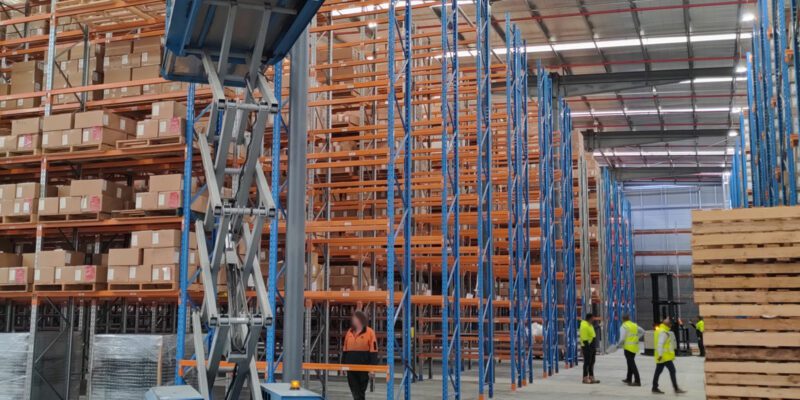
Take double deep pallet racking, for example. As the name would suggest, double deep pallet racking is racking that stores pallets two deep. This increases warehouse storage density by cutting down on the amount of aisle space needed, ultimately meaning more pallets can be stored in a warehouse. To access pallets, forklifts with specialised long forks are used so that they can reach the back of the racking.

Double Deep Pallet Racking Mixes Density and Selectivity Well

Although potentially half of all pallets are stored behind other pallets when using double deep racking, it’s still relatively selective while being relatively dense storage as well. Of course double deep pallet racking isn’t as selective as selective pallet racking, nor is it as dense as something like drive in pallet racking, but it balances everything well in order to be a good choice for a lot of storage situations.

Double deep pallet racking works best in situations where a warehouse is storing two or more pallets of the same SKU. Although pallets will be blocked in, they’ll be blocked in by pallets of the same SKU, making the lack of selectivity less of an issue. In warehouses where there is a relatively high variety of different SKUs, but each of those SKUs have more than two pallets, double deep pallet racking tends to work very well.

Double Deep Pallet Racking Can Be Affordable

Although selective pallet racking is often seen as the most affordable, double deep pallet is also a good affordable option for many storage situations. This is because, like selective pallet racking, double deep pallet racking is relatively simple.

Since double deep pallet racking saves on warehouse space, it can also save on storage costs because more goods can be stored in a smaller area than when compared to selective pallet racking. As with double deep pallet racking being a good mix between density and selectivity, it’s also a good mix between affordability and efficiency.

It’s Also Versatile

All of this leads double deep pallet racking to be a fairly versatile form of pallet racking. It’s not so dense that its use cases are limited and it doesn’t require a business to have too many pallets of the same SKU to make it an over the top storage solution.

While selective pallet racking is generally considered the more versatile type of pallet racking, double deep pallet racking is similar enough to work for many warehouses.

There Are Denser Solutions Available Though

If a warehouse needs even denser storage, there are plenty of options out there that may be more suitable. We’ve already mentioned drive in pallet racking, but something like pushback pallet racking is also an option.

Both of these racking options store pallets multiple spaces deep. Obviously this cuts down on aisle requirements, further improving storage density, but it also means that pallets at the back are further isolated. This is option is great for warehouses that have many pallets of the same SKU, but this isn’t always a situation that businesses find themselves in.

Is Double Deep Pallet Racking Right For You?

If your business is looking to store a moderate amount of pallets of the same SKU, double deep pallet racking may be a good storage option for your warehouse. This type of pallet racking will balance out the need for pallet access while also being efficient with storage density. As the amount of pallets of the same SKU increases, finding a denser storage option may be more suitable though.

If you’re not sure what will be best for your warehouse, feel free to get in touch with us. We’re happy to provide advice.
double deep pallet racking.

What Is Selective Pallet Racking?

Pallet racking comes in all kinds of different types. It may be easy to look at pallet racking and think “it’s just pallet racking,” but the different types and varieties are designed to do different things based on a warehouse’s storage requirements. Rather than going with a one size fits all approach to pallet racking, there are multiple designs to fit different situations.

Selective pallet racking is one of those varieties of pallet racking, and it’s also the most basic kind of pallet racking. But just because it’s a more basic form of pallet racking doesn’t mean it’s not useful for warehouse storage. Rather than basic, selective pallet racking can be thought of as “general.” It’s good for a lot of warehouse storage scenarios but, because it’s so general, it may not be suitable for all types of storage.

What Is Selective Pallet Racking

Selective pallet racking is likely the most common type of pallet racking. This is because it works for so many storage situations. Selective pallet racking has each pallet position accessible, meaning that each pallet is easily accessible via forklift.

Because selective pallet racking is designed for each pallet position to be accessible, the density of the storage is exchanged for the ability to get to every pallet. This means that selective pallet racking needs more aisle space than, for example, double deep pallet racking, but, as mentioned, it’s easy to get to every pallet.

The Benefits Of Selective Pallet Racking

Although selective pallet racking lacks the density of many other types of pallet racking , this becomes a benefit for many storage situations.

In warehouses that have a high variety of SKUs but not many pallets of each SKU, selective pallet racking is often the optimal choice. This is because the large variety of SKUs means that every pallet needs to be easy to access, so selective pallet racking’s selectivity becomes helpful here. It’s in the name, after all.

Going further, selective pallet racking usually doesn’t require any specialised equipment, other than a forklift of course. Other higher density pallet racking that allows for high amounts of selectivity, like narrow aisle pallet racking, requires unique equipment like turret trucks to gain access to all pallet positions.

Because of all of this, selective pallet racking tends to be the most affordable variety of pallet racking, both for the racking itself and the materials handling equipment that goes with it.

Selective Pallet Racking Is Versatile

Selective pallet racking is also known for its versatility. The most obvious way it’s versatile is because it’s just ordinary racking that stores pallets. That may not sound terribly special, but it gets the job done and is easy for warehouse employees to work with.

Further adding to selective pallet racking’s versatility is that it’s easy to modify. Since selective pallet racking doesn’t need any specialised components to it, it can be changed to suit the needs of a given warehouse. This means it’s easy to modify selective pallet racking to accommodate different pallet sizes and even store non-palletised loads like large spools of wire.

Is Selective Pallet Racking Right For Your Warehouse?

If you think selective pallet racking might be the right for your warehouse, you may be right. But also keep in mind that selective is only one of many varieties of pallet racking. Selective pallet racking is easy and affordable, but it also lacks the density of storage that some businesses may require. In the long term, it may be more worthwhile for a business to invest in a different kind of pallet racking more suited to its operations.

That’s why you need an expert sometimes. We have decades of experience in helping businesses select the right kind of pallet racking for their needs. Contact us to find out more.

Staff Lounge Area

Is It Time For An Office Refurbishment?

We all want to have a nice work environment, and because of this, it’s important that a business’ office is up to good standards. Having an office with a good fit-out can keep employees happy and make them more productive. Although a more upscale office fit-out costs money, it can be a good investment because it makes employees happy and presents well to clients and potential customers.

But even a great office fit-out needs to be updated from time to time. What may have worked for the original fit-out may not work anymore. With that, things wear out over time, and it may be a good idea to give an office a spruce up with a refurbishment.

Let’s take a look at the times it’s a good idea to start considering an office refurbishment. If this is your business or office, it may be a good idea to start thing about having one.

Wear And Tear Is Becoming A Problem

As already mentioned, wear and tear can be an issue, even with the highest quality of office fit-outs. Things can be repaired or replaced over time, but at some point it may be time to complete a whole new fit-out or office refurbishment.

When an office’s fit out is starting to become worn and tired, it’s probably time to look at getting a refurbishment done.

There can be a fine line between a completely new fit-out and a refurbishment, but in this context we’re talking about a spruce up, bringing the office back to its former self. Perhaps there are a lot of elements that can be kept, but a refurbishment may look at replacing carpets and fixtures to make it feel new again.

Branding Needs To Be Replaced

In relation to wear and tear is the branding inside the office. Brands change over time, so it’s important to make sure that the office is updated in line with the current branding.

One important aspect to branding is that it’s consistent, so if a company’s branding changes it’s important that the office changes with it. Like fixing a worn out office, this doesn’t necessarily need to be a complete re-fit of the office, it may just be a minor refurbishment to make sure the look and feel of the office conforms to how the brand has evolved.

Staff Levels Are Growing Or Shrinking

Another reason we often see clients needing an office fit-out or refurbishment is because their staff levels are growing or shrinking in that particular office. Staff shrinkage isn’t always a bad thing; the business may have grown, sending most staff to a larger office while keeping a smaller satellite office, or the needs of a business may have changed, allowing more staff to work offsite.

Whatever the reason for changing in staff levels, a business may be looking at having either too many desks or not enough. This problem can often be solved by simply putting in more or removing desks, but it can also mean those desks need to be reconfigured, leading to the project becoming a little larger than originally anticipated.

For situations like this, it’s often a good idea to look at what other refurbishments need to be done in the office. This way it can all be done at once.

Appeasing Staff Is Another Good Reason For An Office Refurbishment

We’ve already mentioned that people want to work in environments that they like, and if an office environment isn’t enjoyed by staff, a business can suffer.

One way a business can suffer is through having difficulty recruiting or having poor staff turnover. This can be due to a poor working environment which, of course can lead to the issues already mentioned. Creating an environment people actually want to work in can solve some of these issues.

With that in mind, a poor office environment can also lead to poor staff wellbeing. People may enjoy working in the office, but due to things like lack of ventilation and lack of natural light, moral may be diminished. A full fit-out may not be needed here, but a refurbishment may find ways of making improvements.

This Also Includes Noise Throughout The Office

Staff wellbeing and the general office environment can also be affected by poor acoustics. What may have worked originally may no longer work because of how the office has grown or just due to how staff interact with each other.

It’s often overlooked, but the acoustic set up in an office can greatly affect productivity. A refurbishment look at rearranging the office floorplan so that sound is no longer a big issue. Alternatively, acoustic dampening strategies can be employed to make the environment more pleasant.

What’s Your Reason For An Office Refurbishment?

Whatever the reason for needing an office refurbishment, we’re here to help. There’s a lot we can do with the existing office environment in order to keep costs and project timeframes down. Contact us to find out more.

Pallet Racking Installation

Can Pallet Racking Be Moved After It’s Installed?

Occasionally a client wants to move their pallet racking from one part of their warehouse to another. Maybe more space is needed in one part of a warehouse or new equipment means the warehouse needs to be reconfigured. Either way, the pallet racking needs to move.

While it’s certainly possible to move pallet racking after it’s been installed, it’s not quite as simple as disassembling it and putting it back up in another part of the warehouse. Let’s take a look at why.

Once Moved, Pallet Racking Needs To Be Re-Certified

All pallet racking needs to be certified by a professional after it’s been erected. This is why we always recommend that clients get their pallet racking professionally installed. If a client installs pallet racking themselves, it still needs to be certified and, if the racking doesn’t conform to AS4084:23, it needs to be rectified before it’s safe to use.

When pallet racking is moved, even if it’s only moved a metre, it needs to be re-certified to make sure it complies with the Australian standard. This is to ensure it was erected properly, wasn’t damaged in the move, is properly attached to the ground, and more.

Although this may seem over the top, especially if it’s not a lot of pallet racking, that’s what the standard and the law says. Even if the risk of an accident involving the pallet racking is low, a business will be in a lot of trouble if the racking is uncertified.

Once Moved, Pallet Racking Needs To Conform To New Standards

In some situations, pallet racking doesn’t need to completely conform to AS4084:23. These situations generally involve pallet racking constructed prior to 2023 and, in these situations, it still needs to adhere to AS4084:12. However, if the older pallet racking is dismantled and rebuilt, it then needs to be built inline with the new standard. This is the case even if the pallet racking is built in the same place.

While there are a lot of similarities between the old Standard and the new one, there are a lot of differences as well, and something subtle could mean that the move has made the pallet racking no longer compliant.

This is another reason why it’s important to use a professional company to not only build your pallet racking, but also move it if it needs to be moved. While certain upgrades may need to be completed to make the pallet racking compliant with the Standard, experts know what needs to be done and may have an economic solution to this.

Moving Pallet Racking To A New Location Can Be More Complicated

Things may get more complicated if you’re relocating warehouses. Pallet racking is often designed for the ground that it’s being constructed on. Most of the time this is cement or concrete that’s designed to withstand a specific load.

While this load may be the same across two different warehouses, it’s best not to assume this. What worked in one warehouse may not work in another. On a more positive note, a new warehouse floor may be able to withstand a heavier load or taller pallet racking, allowing for a denser storage configuration. It’s worth checking.

You Can Move Your Pallet Racking, But Use A Professional

Although we initially said that moving pallet racking isn’t necessarily simple, it’s not difficult. You just need to understand that the pallet racking will need to be re-certified and may need to comply with newer standards. This isn’t difficult to do, but it’s something that needs to be planned for. Because of this, we always suggest that clients use professionals to move their pallet racking. That way that can be sure that the project goes smoothly and that there will be no problems with their racking.

If you have a pallet racking project you need help with, get in touch.

Double storey mezzanine with pallet racking and shelving.

How To Maximise Warehouse Space

With warehouse space at a premium, it’s always important that it’s used effectively. Whether you own or rent your warehouse, the space itself costs money. As businesses grow, warehouses become more crowded, leaving business owners with the choice between moving warehouses or figuring out how to make their existing property work. Moving to a larger warehouse comes with its own expense, not to mention the likelihood of having to pay more for something larger. Because of that, figuring out how get more storage space in your existing warehouse is usually preferrable. On the other side of this is when a business moves to a new warehouse and wants to ensure its storage space is maximised; this prevents future problems and helps make sure a business can stay at their location as long as possible.

Because of all of this, it’s crucial that warehouses are used as effectively as possible. This isn’t as simple as trying to fit in as much pallet racking and shelving as possible. That’s a good start, but there’s a lot that can be done to achieve maximum storage space. When we’re optimising a warehouse, we usually start with the basics before moving onto more sophisticated methods of maximising spaces. Here are some of the basics.

First Understand Why Your Warehouse Is Full

The first step to solving a problem is understanding what that problem is. Again, solving warehouse storage problems isn’t just about adding more pallet racking or shelving; this might not actually be the problem.

A big problem we see is that a warehouse configuration that used to work no longer works. A main reason for this is that a business has grown over time. In the early days of the business, the warehouse may have seemed to have operated efficiently, but as things get busier, cracks begin to form. This is when a business needs to step back and examine its warehouse configuration.

It’s also worth looking at what sort of products are moving through the warehouse most frequently as well as how and where they’re stored in the warehouse. A lot of business never re-evaluate how everything is arranged and continue with business as usual, even if there business focus slowly changes over time. Different products may change in popularity over time and a once popular product may still be stored in a prime location while a now more popular product is at the back of the warehouse stored in the wrong type of pallet racking.

Going further on this, it’s also always worthwhile to consider seasonality. Many businesses experience seasonal shifts in operations, and it could be worthwhile to adapt to this. While rearranging a warehouse every few months probably isn’t the best idea, understanding the seasonal aspects of a business and how the warehouse can think ahead for changes may be beneficial.

Consider What Can Be Moved To Create Space

If a warehouse isn’t arranged in a good way, a lot of space can be lost. A warehouse layout seems pretty simple: put pallet racking or shelving into rows and leave space for packing and materials handling equipment, and that should do, but it’s not always the case.

Simply by rearranging pallet racking or reconsidering where something is stored, more storage space can be found. Sometimes it’s not a lot of space that can be found, but combined with other ways of increasing warehouse storage space, a warehouse can become much more usable.

Get The Right Kind Of Pallet Racking And Try To Reduce Aisles

Installing the right kind of pallet racking into a warehouse can be a great way to find more storage space. Sure, new or even used pallet racking is an added expense, but this is often less expensive than finding a new warehouse. Just like how a business may grow out their warehouse configuration, they may also grow out of their pallet racking. Selective pallet racking, for example, may be a good affordable option for a new business, but upgrading to a denser pallet storage option may be more suitable for a mature business.

The type of pallet racking needs to be considered when also looking at whether anything in the warehouse needs to be moved.

Also when considering the type of pallet racking being used and the overall configuration of the warehouse, it’s also worth considering whether aisle space can be reduced or whether the total amount of aisles between racking can be minimising. Fewer aisles means there’s more room for storage, after all. Something like narrow aisle pallet racking, for example, increases storage space while still having a high degree of selectivity by using specialised materials handling equipment to work within the smaller aisle widths. Meanwhile, a racking style like double deep pallet racking can reduce the total amount of aisles needed by storing pallets of the same SKU two deep.

See If You Can Go Up

The vertical space in warehouses is often under utilised, so it’s often a place to look if you’re trying to find more storage space.

If there’s space to make pallet racking go higher, use it, even if that means replacing materials handling equipment. Getting new forklifts is often less expensive than finding and moving to a new warehouse. If it supports the business growing, it’s a good investment.

Another way to utilise vertical space is through a mezzanine level or raised storage area. This is another way to reconfigure a warehouse to find more space in general. By moving storage or part of the warehouse operation above the floor, you can then do something else underneath, effectively doubling the space for the warehouse. A mezzanine level can be supported by pallet racking and also have shelving on it, making it a very versatile storage solution.

Find Out What’s Possible In Your Warehouse

These are just some of the options available to get more space out of your warehouse. If you’re curious about doing more, feel free to get in touch with us.

Unloaded double deep pallet racking.

5 Reasons To Get New Pallet Racking

When it comes to businesses that use a warehouse, pallet racking can often be one of the biggest one off costs, but it’s also an investment. However, like so many things that may appear to be a one off purchase, they need to be replaced or upgraded, leading to another purchase.

While every business wants to minimise its costs, sometimes there’s a positive to having to spend money, especially on getting new pallet racking. Let’s explore those positives and how to get the most out of a pallet racking upgrade. You’ll see it may be a good thing.

Increase Safety With New Pallet Racking

Workplace safety always needs to be the highest priority, and new or upgraded pallet racking can help lead to a safer warehouse.

Although yearly pallet racking inspections should keep track and repair any damage, wear and tear takes it toll over time and it may be time to look at a full replacement of your pallet racking. Although this is a cost, it’s much less than having to recover from an accident that destroys equipment and hurts people.

New Pallet Racking Is An Investment

We already mentioned that the initial purchase of pallet racking is actually an investment in a business, and an upgrade can be an investment too. We’ll explore this is a little more detail in the following reasons to get new pallet racking, but all in all, and upgrade can lead to denser storage without having to sacrifice selectivity, a more efficient warehouse, and generally taking advantage of newer racking technologies.

Basically, with older pallet racking, you may not know what you’re missing out on. Although new pallet racking is an expense, it’s an expense that may actually pay for itself over time.

Increase Storage Density With New Pallet Racking

As a business grows, so does its need for storage. This means that the business needs to relocate or figure out a better solution for its existing facility. Either way, there’s going to be an expense, and that expense can often be minimised simply by installing better pallet racking.

New and upgraded pallet racking may be able to take heavier loads allowing for higher racking or heavier pallets; you may be able to find a denser storage solution; or you may just be able to afford something better now that the business has grown.

Or You’re Moving To A New Warehouse

If the time has come that a business must move to a new warehouse, either because they’ve exhausted the storage density of their current facility or a lease is ending, it may be a good time to buy new pallet racking. After all, the old pallet racking needs to be removed anyway, and it may be cost effective to buy new pallet racking, especially when you take pallet racking buy back into account. Although we offer new pallet racking, we also purchase and sell used pallet racking for more budget conscious businesses. Although selling your pallet racking to us won’t offset the entire cost of new pallet racking, it can significantly lower it, getting a business brand new pallet for a fraction of the cost.

Take Advantage Of New Racking Technology With Updated Pallet Racking

All of this is to say that technology changes over time, and this includes pallet racking. Steel gets stronger, allowing heavier loads to be used on pallets. New storage ideas are had, creating new ways to store pallets more efficiently. Computers and technology improve over time, which can lead to better ways to figure out warehouse optimisation.

It’s easy to think that pallet racking is just a bunch of steel used to stack pallets, but like everything, it improves with time and changes in technology. Pallet racking that was bought and installed 10 or 20 years ago is likely obsolete.

Talk To Us About A Pallet Racking Upgrade

Ultimately, it’s important to periodically evaluate your current warehouse storage solution and determine whether it’s the best thing for your business. Of course you shouldn’t replace or upgrade existing pallet racking for no reason at all, but if there’s a good business case for it, an upgrade can be good for a business.

If you’re curious about whether your business will benefit from new pallet racking, contact us today.