Pallet Racking Installation

Top 5 Pallet Racking Mistakes

Whether you’ve been using pallet racking for years or only recently installed it, the odds are you want to make sure that it’s working correctly and will last for as long as possible.

Although pallet racking is pretty simple, it does often represent a large financial outlay for warehouses and factory operators. Because of this, it’s important it’s important to avoid any mistakes in pallet racking installation, maintenance, and use.

The good news is that, as long as you’re sensible, your pallet racking will stay in the best condition possible and likely last longer than it needs to. To make sure you get the best out of your pallet racking, we have a number of tips around the mistakes to avoid with pallet racking.

Not Using Pallet Racking Protection

As we already mentioned, buying and installing pallet racking is a large investment for a business. Because of this, it only makes sense to install pallet racking protection, especially in areas that are prone to damage.

The bottom portion of pallet racking is usually the most likely to be damaged because it’s the most accessible. This makes collisions with forklifts more common and even getting hit with pallets or heavy objects being moved by warehouse workers. Although there are a lot of products and ways to protect pallet racking, at a minimum, upright protection is needed on every pallet racking installation.

Without adequate protection, it becomes not “if” your pallet racking gets damaged, it’s “when” your pallet racking gets damaged. The right protection can mean the difference between easily replacing the less expensive protective barrier or the more expensive pallet racking itself.

Not Performing Regular Inspections Yourself

Pallet racking inspections need to be conducted yearly by a competent person. These inspections will identify any damage to your pallet racking that needs to be fixed in order for it to be certified for another year.

While the minimum yearly inspections specified by AS 4084:23 are a great first step to ensuring a safe warehouse, doing regular inspections yourself will not only make your warehouse safer, but also prolong the life of your pallet racking. This is because damage recognised early is often less severe and less expensive to replace.

Take, for example, damage caused by overloaded pallet racking. This can bend and warp the pallet racking in various ways. Prolonged overload will only make the problem worse. Even if the large load is removed, the pallet racking may be so warped that it can no longer even take a lighter load, meaning it will deform further anyway. Regular pallet racking inspections would pick up on this sooner, minimising what could have become very major damage.

Overloading Pallet Racking

Although you should be inspecting your pallet racking regularly to check for damage and overloading, it’s always a good idea to avoid overloading in the first place.

All pallet racking is rated for different weights in different configurations. The load that the pallet racking is rated for should be posted on the racking itself. Exceeding the rated load on racking can cause damage either immediately or over time. Worse still, overloaded pallet racking can lead to the pallet racking collapsing.

The best way to avoid problems from overloaded racking is simply not to overload the racking in the first place.

Using The Wrong Kind Of Pallet Racking

There are a variety of different kinds of pallet racking, and each one has its best uses in specific circumstances.

Basic selective pallet racking, for example, is great for a variety of general warehousing applications, but what it has in selectivity it lacks in storage density. Double deep pallet racking, on the other hand, offers more storage density, but works best if you’re storing multiple pallets of the same SKU. Beyond those two examples, there are many other types of pallet racking; each has its best use case.

Sometimes a warehouse operator will just try to get the most density or the most selectivity without thinking about the balance between the two and finding a pallet racking solution that perfectly suits their situation.

Before investing in new pallet racking consider whether it’s the right kind of pallet racking for your business.

Trying To Install Pallet Racking Yourself

For smaller racking installations, it be tempting to try and save some money and install it yourself. This can lead to a lot of problems.

Firstly, installing pallet racking isn’t a one person job, so ultimately you’ll have to pay your own workers for their time doing the installation. With that in mind, professional pallet racking installers can likely get the job done faster.

Going further, once the pallet racking is installed, it then still needs to be inspected and certified by a competent person.  If your self installation has made any mistakes or goes against AS 4048:23, it will need to be fixed, causing more time and money.

Ultimately, getting pallet racking professionally installed ensures it’s up to standard and may actually be the less expensive option.
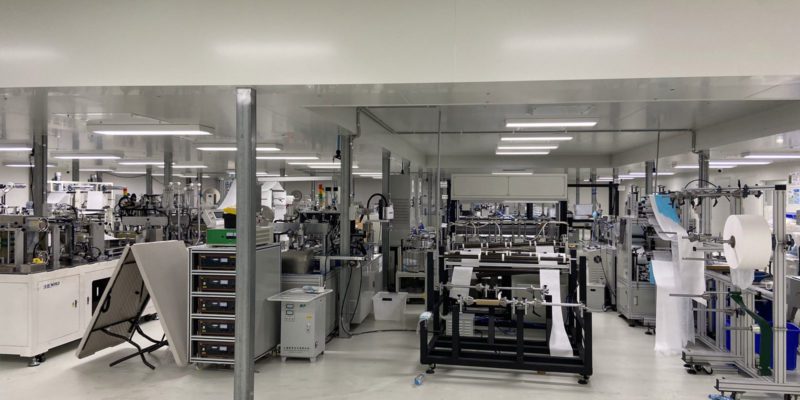
Class 7 Cleanroom Construction

Site Considerations For Clean Room Construction

A clean room can be constructed almost anywhere. Depending on the space requirements and the purpose of the clean room, one can be built in anything from converted warehouse space to an office.

While the actual location of the clean room likely won’t affect the ISO rating of the facility, it’s still worth taking some time to considering the site in which a new clean room will be built. In this article we’ll go through considerations for larger industrial areas and offices used as clean room. Then we’ll go through the broad process of building a cleanroom in order to better understand the considerations that need to be made in the design process.

Clean Room Site Considerations

Large Warehouse Or Other Industrial Space

A large warehouse or industrial space can often be the optimal place for a clean room facility. There is plenty of room to build the cleanroom with little to no space constraints. Just keep in mind that the freedom afforded from the larger space can also be a burden. The larger the clean room, the more expensive it is to build and also the more expensive it is to run.

However, if the clean room is built so it doesn’t take over the entire warehouse space, this extra room can be used for materials storage and even converted to office space. With the right clean room design and a high warehouse ceiling, it’s also possible to put a mezzanine office in above the cleanroom that would site relatively independently of the clean room itself.

While more space isn’t always better, there are intelligent ways to design in the space in order to get the most out of it.

Small Warehouse Space

A smaller warehouse space may be more beneficial for a clean room as it will likely have better utilisation of space. Keeping the space constrained means that the clean room designer needs to be efficient in their designs, and this could save money in not only construction but in ongoing rent of the facility.

The biggest drawback to using a smaller industrial space for a cleanroom is that if all the space is utilised, it’s unlikely a business could easily expand if it needs to. Sometimes planning for expansion can be a good thing.

Converting An Office Space To A Clean Room

Converting an office space into a clean room can also be a good option, especially because a lot of the infrastructure for its operation may already be present. With this, the existing base building can also be used in a lot of places.

The main drawback to using office space as a clean room is that while you can use the base structure, all the surfaces need to be replaced with non-particle shedding surfaces. Basically, the surfaces in modern offices like walls and carpets aren’t designed to be clean room friendly.

Process Of Clean Room Planning

The biggest consideration for building a clean room in an existing space is that all spaces are different, so each clean room build will be different from the last.

Because of this, beyond considering the size of the space, there are some general steps that are taken in the clean room construction process.

Step 1 – Determine the site and inspect it:

This goes beyond just figuring out the size of the site that’s needed and taking a look. Not all sites are suitable for a clean room, so the site should be inspected by a professional as early as possible. Part of this inspection and planning would be an assessment of the existing air quality to plan the HVAC and filtration system; it’s possible for a site to not be suitable simply because the air filtration system won’t be able to work with what’s in the air.

In addition to the more basic aspects of the site inspection, it’s also important for the clean room designer to understand what the clean room will be used for and the required ISO certification before clean room design begins.

Step 2 – Design the clean room:

With the dimensions of the clean room known, as well as know HVAC and filtration requirements, the actual design of the clean room can happen.

The design takes into account the desired layout of the clean room as well as the location of any furniture and fittings, as this will affect the airflow in the clean room and ultimately how well it can circulate air.

The design also takes into account the ISO requirements of the clean room as well as its use. Both these things will affect the clean room overall as well as elements such as airlocks and more unique features like anti-static systems for tech clean rooms.

Step 3 – Clean Room Construction

With the clean room designed, it can now be build. This not only involves building walls and HVAC systems, but also installing non particle shedding panels throughout the clean room.

While it may seem a simple three step process, all the steps are important to create a well functioning and efficient clean room that not only is up to the proper ISO standards, but also up to the standards of the business using it, and that it’s fit for purpose.

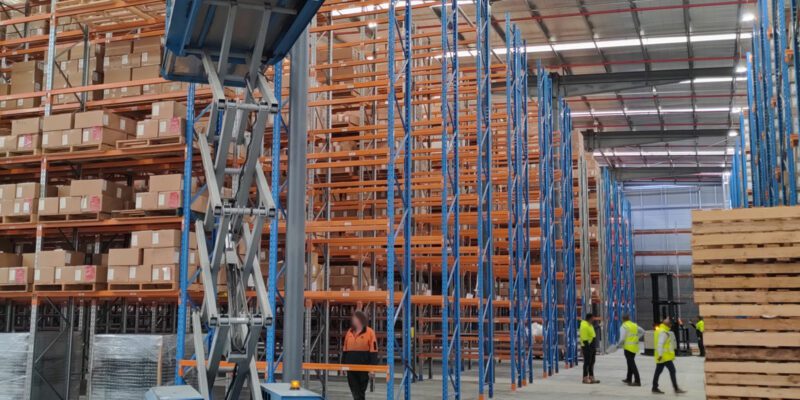
Warehouse containing many rows of selective pallet racking. A forklift is in the foreground.

Should I Move Warehouses Or Expand My Existing One?

As a business expands, it may find that it needs more warehouse storage space for its products. This can put the business into a difficult position. Relocating a warehouse can not only be costly, but it can also lead to business downtime and other risks. That’s not even mentioning having to find a new and bigger warehouse space, which can also be difficult. Ultimately, having to move to a new and bigger warehouse should be the last resort for a business.

Beyond simply finding a new warehouse site, there are a number of options to increase the storage space in a warehouse and make it more efficient. Let’s explore these.

Is It Possible To Physically Expand A Warehouse?

Anything is possible when it comes to construction, but some solutions aren’t always feasible.

Assuming a business is renting their warehouse space from a landlord, they may not be able to make permanent or near permanent alterations to the base building like physically expanding the warehouse. The landlord may agree to the alterations, but may still want the alterations removed for the final make good when the business moves out. This may make things too expensive in the long term.

This, of course, is all assuming that the land the warehouse is sitting on has the space for the expansion and, if it does, the local council would allow the expansion. Many councils have regulations relating to the amount of car parking spaces for a business and how much land can be used for physical buildings.

Because of this, actually expanding a warehouse may not be possible, but there’s a lot that can be done with the existing warehouse space that can allow it to store more.

How Much Space Does Your Warehouse Actually Have?

The simple answer to this question is just the total cubic metres of your warehouse, but that’s not 100% correct. Even the most optimised warehouse will have space not used for storage; this space is for people and materials handling equipment to operate.

To determine your warehouse utilisation, you need to think in total cube utilisation. This is the total volume of available storage in your warehouse divided by the total volume of your warehouse. Keep in mind that this is the volume of the warehouse and includes the vertical height as well. After all, this is potential storage area.

So, for example, if you have a warehouse with 40,000 cubic metres of volume and you have 10,000 cubic metres of pallet racking, your storage cube utilisation is 25%. And 25% is considered about optimal. Although this number means that 75% of your warehouse’s volume is “unused,” consider that there needs to be space between aisles for access, places for materials handling equipment to go, space for packing of goods, and more. Generally speaking, 22%-27% is considered good for utilisation.

So what does this mean for expanding or relocating a warehouse? Before you consider any of it, see if you’ve maximised the storage space in the warehouse itself. You may find there’s actually space to store more goods.

Consider The Warehouse Layout

If the numbers say your warehouse should have more storage but it looks like more pallet racking or shelving simply won’t fit into the face, this may mean that the layout of the warehouse isn’t optimal. With a properly laid out warehouse, it’s possible to fit in more pallet racking or other storage.

Perhaps the pallet racking needs to be rearranged to accommodate more. Maybe, with the right type of racking, more vertical space can be utilised. If workers need easy access to all levels of shelving, maybe a mezzanine level will allow more use of your warehouse’s vertical space while still allowing easy access to everything.

Basically speaking, it’s easy to say “this warehouse is full” without actually considering the layout and whether it can be optimised.

Re-evaluate The Type Of Pallet Racking Being Used

Too often businesses use basic selective pallet racking for their storage needs. While selective pallet racking is a great solution for many warehousing needs, there are many other types of pallet racking designed to suit the needs of specific storage situations.

Double deep pallet racking, for example, can reduce the amount of aisles needed in a warehouse as it allows pallets to be stored two deep on racks. This is a great solution for businesses who have multiple pallets of the same item. A system like this can get even more dense with drive-in pallet racking or push back pallet racking. The exact type of pallet racking used, however, will depend on your business needs.

With that in mind, there are many more types of pallet racking available that take into account the amount of SKUs a business has, whether first in, first out or first in, last out storage is needed, stock rotation needs, and more. While selective pallet racking is often a good storage option, there may be better storage options that can not only increase the total storage capacity of a warehouse, but also make its operation more efficient.

It’s Not Always About Warehouse Space

Before considering relocating your warehouse or trying to expand on your existing one, consider what the real problem is and determine if there is anything that can be done with the existing space. Even if it’s determined that your current warehouse is operating at peak capacity, at least that’s known before embarking on a larger project.

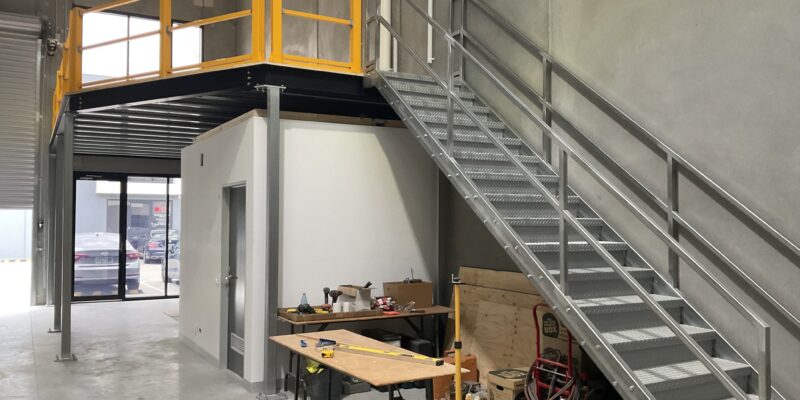
Custom fabricated mezzanine level in warehouse.

What Is A Mezzanine Level?

It’s likely you’ve heard of a mezzanine level, whether it’s in an industrial, general commercial, or even residential setting, but you may be unsure what a mezzanine level is and how it’s different from simply adding another storey to a building. You may be considering getting a mezzanine floor or general raised storage area for your warehouse, but you’re not familiar enough with the concept to make a proper decision.

In this article we’ll explain what a mezzanine floor is, what the benefits of installing one is, and also answer a few more frequently asked questions about mezzanines.

How Is A Mezzanine Different From Adding A Story To A Building?

To be a mezzanine rather than its own separate storey, a mezzanine needs to be built so that it’s not built to cover the entirety of the floor below it. This means that at least one side of the mezzanine is exposed and looks over the floor below. Because of this, to build or install a mezzanine in any space, the ceiling needs to be high enough to incorporate the mezzanine. This is why creating a mezzanine for storage is often a popular option in warehouses and industrial settings.

So, rather than building on top of the existing structure, a mezzanine is built within it, this is why it’s different from simply adding another storey to a building.

A big benefit to installing a mezzanine floor, especially in a warehouse or industrial setting, is that it can be built so that the structure is completely independent of the base building. This means that much of the mezzanine can be fabricated off-site and simply put together on site, limiting disruption to the business. This also means that it’s easy to remove the mezzanine at the end of a commercial lease and also relocate it.

Are Permits Required To Install A Mezzanine?

Planning permits are usually required to install a mezzanine. While sometimes a permit isn’t needed, this will always depend on the size of the mezzanine compared to the rest of the building as well as the local council area that the mezzanine is being installed in. If you’re considering building a mezzanine or raised storage area in your warehouse, we can help you with any relevant permits.

What Are The Benefits Of Installing A Mezzanine Floor?

Installing a mezzanine floor in a warehouse can have a lot of benefits.

As already mentioned, a mezzanine can be built completely independently from the rest of the building. Because of this it’s easy to drastically increase storage space without having to move to a larger premises or permanently change the base building. Warehouse space can be expensive, so using the vertical space in the building is a great way to make the most of it.

There are also a lot of options when it comes to building a mezzanine in a warehouse. The mezzanine can act as raised storage with open space below it for even more storage, store machinery underneath it, or even as car parking with storage above. Alternatively, a mezzanine can be supported by pallet racking or even industrial shelving. If the space that the mezzanine is being installed in is an unusual shape, it can be custom built to fit that shape. All in all, mezzanines are fairly customisable to suit specific needs.

In fact, while there are a lot of “standard” installations and set ups for mezzanine floors, it’s also possible to custom fabricate elements to suit the specific needs of a business or the layout of the space. For example, if you need a specific stair width, the design and creation of the mezzanine can be changed.

Designed correctly, a mezzanine floor can often hold just as much as ground level and even incorporate pallet racking or shelving. The racking and shelving doesn’t sit on the mezzanine floor itself, rather the floor is built around the racking and shelving, allowing easier access to high up items.

All in all, mezzanines floors are an affordable way to expand a warehouse or industrial space without having to relocate or build something more complex.

Planning Your Mezzanine Floor Project

If you’re considering a mezzanine floor for your space, it’s usually best to call in an expert. Cheap do it yourself mezzanine floor kits may do the job for light duty work, but aren’t applicable for heavier storage or unusual shapes. With that in mind, if you’d like to incorporate a mezzanine level into existing pallet racking or shelving, you’ll need professional installation and pallet racking safety certifications for the modifications.

All projects are different, whether it’s a pallet racking installation or creating a raised storage area for a warehouse. Every business has a different use and business need, so finding a good solution oriented supplier like Colby Dandenong will give you a great outcome.

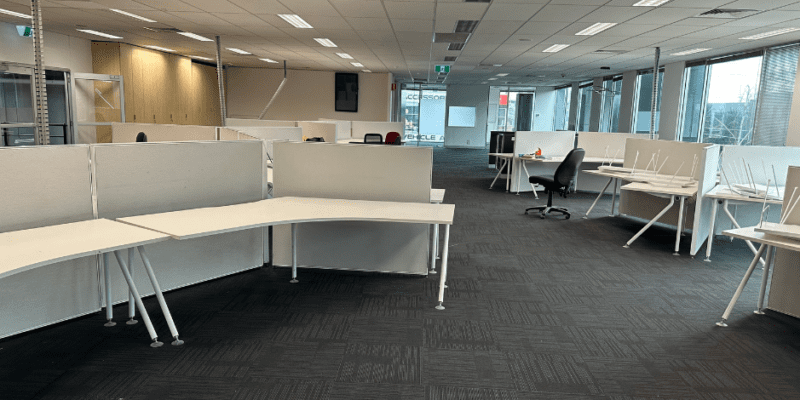
An office with a new fit-out. Desks are assembled but no chairs are present yet.

How To Create A Sustainable Office Fit-Out

Regardless of your industry, staying sustainable in your business is important. But this extends past your day to day operations, it also means ensuring that the office that you and your business use every day is environmentally friendly as well.

Although the word “sustainable” is thrown around a lot these days, there are ways to actually achieve a sustainable office fit-out without blowing out your budget and while actually being environmentally friendly (and not just saying you are). A sustainable office fit-out or office refurbishment is all about using the right materials that are not only friendly to the environment, but also reusable so as not to diminish our limited natural resources. Beyond being environmentally friendly, a sustainable office fit-out is also friendly and sustainable to the staff members working in the office; this is just as important.

Benefits of Sustainable Office Fit-Out Practices

Having a sustainable office fit-out has its benefits beyond just caring for the environment, it can be good for the bottom line as well. Having energy efficient lighting and appliances reduces the running cost of a building, for example. Reducing the materials used in an office’s fit-out or refurbishment also means less material to remove and get rid of when it’s time for your end of lease make good, again reducing cost.

Beyond cost, having an environmentally friendly company, including the office space, can be great for branding and the perception of your business. It may not be possible for every aspect of a business to be 100% eco-friendly, but businesses that do what they can, where they can, are generally perceived better by the public than those who don’t.

A more sustainable office can also lead to increased employee morale, which in turn can lead to better productivity. This is because people like things like natural light in their office spaces. Increased air quality from a sustainable office fit-out also makes workers happier and enjoy their office space a lot more.

Although some aspects of sustainable design cost more upfront, they save money in the long term and quickly pay for themselves. Other aspects of sustainable design cost the same or are less expensive than alternatives but still have the benefits listed above. Sustainable office fit-outs are win-win.

Fit-Out Your Office With Sustainable Materials

One of the more obvious parts of sustainable office design is the use of sustainable materials, but this is also a broad topic to talk about.

A basic aspect of using sustainable materials is making sure the materials you use are renewable, recycled, or at least low impact. A common area to take advantage of this is in flooring. Materials like bamboo are considered renewable and it also makes great flooring. Alternatively, you can use recycled timber for flooring , partitions, or other aspects of the office fit-out.

What people often miss out on though, is that a polished concrete floor can often be the most sustainable option for flooring, and it looks great too! This is because the floor of the base building is often concrete. While concrete isn’t usually an environmentally friendly option, by not adding anything more to the building, there’s no additional environmental impact.

Beyond sustainable materials, it may also be worthwhile to use low VOC paint. VOC stands for volatile organic compounds. Not only are these compounds bad for the environment, they are also bad for people breathing them in every day. A low VOC paint benefits everybody.

If your office space has a warehouse attached, you may be surprised to find out that pallet racking can be sustainable too. While steps can be taken to minimise the environmental impacts pallet racking manufacture and installation, for further eco-friendliness, second hand pallet racking is also a good option. Not only is this environmentally friendly, it also saves money.

Sourcing and using sustainable materials for an office fit-out isn’t difficult, but it can be confusing for people who aren’t familiar with the options available. New technologies and materials are becoming available every day, so it’s best to speak with someone who specialises in these things.

Sustainable Design Principles For Office Fit-Outs

Beyond the actual materials being used in an office fit-out, it’s also important to design the office and its layout in a sustainable way.

One way already mentioned in this article is lighting. Taking advantage of using more natural light is an easy way to be sustainable in the office while also keeping employees happy. Where natural light can’t be used, opt for LED lighting which can be up to 75% more efficient, saving even more money.

A good HVAC system is also important in any office environment in order to keep occupants comfortable. While more efficient heating and cooling can be more expensive to purchase and install, this is an example of thing that will pay for itself over time in cost savings. It always pays to be sustainable!

When designing amenities, it’s worth looking at water saving fixtures, appliances, and toilets. Again, something like this is not only environmentally friendly, but cost saving in the long term.

A final small touch to further reinforce sustainability in an office fit-out is to ensure there is plenty of space for indoor plants. This may only be small, but it can greatly affect the morale of employees as well as the air quality in the office.

Work With A Professional For A Sustainable Office Fit-Out

There are many more ways to be sustainable when fitting-out a new office space, some are smaller, some are bigger. Very often it comes down to the selection of the right material for the circumstance or the layout of a specific area. And that’s where experts come in.

If you want your next office space to be as sustainable as possible, get in touch with us today.

Retail Showroom Fit-out

What Is A Fit-Out?

A fit-out, whether it’s for an office, warehouse, retail space, restaurant, or any other commercial building refers to making the inside of the building fit for purpose. Prior to having a fit-out done, most commercial spaces are just a shell of a building. Often called a “white box,” a commercial building prior to getting a fit out is empty with no fixtures or fittings in it and usually just basic white paint. The process of doing a fit-out adds everything to the inside of building that’s needed for a business to operate in it.

Although a commercial fit-out isn’t difficult for an experienced building company, the process can be complicated and even lengthy for larger projects. So let’s look at fit-outs in more depth to better understand the process.

Commercial Base Buildings Are A Blank Slate

Generally speaking, at the end of a commercial lease the old tenant completes what is called a make good to bring the building back to the condition that it was in prior to them occupying it. This make good (sometimes called a defit) usually gets the premises back to the base building: basic white paint, bare flooring, removal of any internal walls or partitions, removal of any fixtures and fittings, etc. What’s left after the defit is an empty building or “white box.”

Although the building itself is sound, it’s hardly fit for commercial occupation. The building itself will conform to any government regulations as a building, but it may not conform to regulations to actually be used as an office space, restaurant, shop, etc.

It’s up to the tenant to make the space their own.

A Tenant Can Add Anything They Want To Their Fit-Out

Although the building’s landlord may have a few limitations on what the tenant can do to the it, anything can be added to the shell building as part of a fit-out, and fit-outs vary depending on what the building is being used for.

Office and shop fit-outs are common, but even a big space like a warehouse needs a fit-out. This may include organising areas for equipment as well as installing pallet racking and shelving. Other facilities may need cool storage for their products, this would be part of the fit-out.

A typical fit-out, regardless of what type of building is receiving the fit-out would likely include things like custom lighting, painting, floor coverings, ceiling coverings (including suspended ceilings), and all fixtures and fittings. While the base building may have amenities like toilets and kitchens installed, they would likely be basic and may need to be modified.

It’s also during the fit-out project that the building becomes fit for purpose and compliant with any laws and regulations. This would mean that the fit-out includes installing any fire safety equipment, complying with occupational health and safety, and any cleanliness and hygiene requirements.

And of course, once the building work is done, a fit-out also includes any furniture that is required for the business. For an office fit-out, this would obviously include the installation of desks, the reception area, break out areas, and meeting rooms. For a retail space this may include installing product shelving, furnishing the break room, and setting up the point of sale system.

A fit-out takes a blank, empty building and turns it into something ready to do business from.

Types Of Fit-Outs

Fit-outs can range in size and scope. Although a full fit-out generally starts with a base building, some base buildings have more to them than others, so less work is required for things like wall and floor coverings. It’s also important to note that there is a difference between a fit-out and a refurbishment, however the line between the two can be blurry.

Hard Fit-Out/Category A Fit-Out

Sometimes called a hard fit-out, category A fit-outs usually deals with the basics of making the building fit to occupy. This would include things like getting the flooring, walls, and ceilings done, installing utilities, HVAC, fire safety, amenities, etc.

The level of work needed for a category A fit-out will vary depending on the condition of the base building. As mentioned, some base buildings may have suitable floor and wall coverings, so this may not need to be changed. Some based buildings may already have great amenities, so those won’t need to be installed. It can vary.

While some businesses just need a hard fit-out, others will continue the project and start their soft fit-out after the big things are done.

Soft Fit-Out/Category B Fit-Out

With the building now suitable for occupation, it now needs to be fit for use.

A category B fit-out (sometimes called a soft fit-out) gets things like furniture installed as well as dealing with the aesthetics of the building. A business may choose to work with an interior designer to get the building looking the way they want it, or it may be as simple as relocating office furniture from an old location to the new one.

Like category A fit-outs, category B fit-outs can vary in size and scope, depending on what the building is being used for and the needs of the business. Also like category A fit-outs, category B fit-outs are often part of a larger project of bringing a building from a shell up to something that can be used by a business.

What To Consider When Planning A New Fit-Out

There’s quite a lot to consider when planning a fit-out of your new building. Every fit-out is different, even for businesses in the same industry with a similar space. Everybody’s needs and tastes are different, so that will affect the fit-out project as well.

When first starting to plan a fit-out, there are some things to make sure you do from the start.

Get a detailed quote. In this quote, you should make sure you understand exactly what is and is not included in the project. It’s usually a good idea to make sure the quote at least includes the design, project management, materials, and actual fit-out construction. Some projects may require permits, and it’s important to clarify who will be responsible for this. It’s also important to note that some fit-outs may change the building’s purpose of use, which will require further town planning permits. For example, if you’re doing a restaurant fit-out in a former retail space. Experts can help with this, and make sure you know who’s responsible for finding out.

Consider your brand and positioning. It’s important that your brand is taken into account when planning and designing your new fit-out, this way you can incorporate any brand colours as needed as well as consider how you want your business to look from the outside.

Make sure your utilities are correct. All of your utilities, including internet, need to be suitable for the business you’ll be doing. Speak with your landlord to understand who is responsible for these things.

Plan for legal and compliance issues. While partnering with a specialist fit-out company will ensure your new premises is suitable for safety and most other legal compliance concerns, your business may have regulations unique to the industry. Communicate this with your fit-out company and make sure it’s planned for.

Ultimately, it’s easiest to use a single company to do an entire project, and that’s where A1 Precision Solutions come in. If you’re in need of a fit-out for your office, warehouse, shop, or anything else, feel free to contact us.